Most legal problems for new businesses aren’t caused by bad luck — they’re caused by skipped steps in the first ninety days.

Starting with Intention
Launching a business requires careful planning, strategic decision-making, and legal preparation. Taking the proper legal steps early can help entrepreneurs reduce risks, avoid costly mistakes, and create a strong foundation for long-term success.
A new business is not just a product launch — it is a small constitutional moment, and the documents you sign now will govern years.
Entity, Registration, Compliance
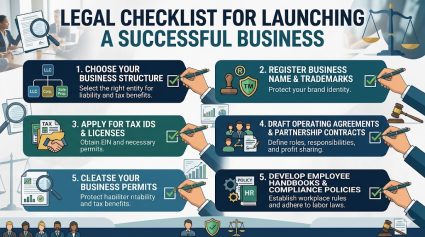
One of the first decisions involves selecting the right business structure. Options such as sole proprietorships, partnerships, limited liability companies (LLCs), and corporations each offer different liability protections, tax responsibilities, and operational requirements. Choosing the appropriate structure is critical for protecting personal assets and supporting future growth.
Business owners should also register their business name, obtain necessary licenses and permits, and comply with local, state, and federal regulations. Failing to meet legal requirements can lead to penalties, delays, or operational issues.

Contracts, People, and IP
Contracts are another essential component of business operations. Clear agreements with clients, vendors, employees, and independent contractors help define responsibilities and minimize disputes. Businesses should also establish employment policies that comply with wage laws, anti-discrimination regulations, and workplace safety standards.
Protecting intellectual property is equally important. Trademarks, copyrights, patents, and confidentiality agreements help safeguard branding, products, and proprietary information from unauthorized use.
Privacy and Long-Term Posture
Modern businesses must also consider data privacy and cybersecurity compliance, especially when handling customer information online. Strong privacy policies and security measures can reduce legal exposure and build customer trust.
Working with experienced legal professionals during the launch phase can help business owners navigate complex regulations and avoid common legal pitfalls. A proactive legal strategy supports stability, compliance, and long-term business growth.